Wheel Drop Zone Clock: Can Time?
The wheel drop zone clock is not a decorative gimmick — it is a synchronization mechanism, and if you think the timer is just there to look pretty, you have already lost money. Every spin cycle on a live dealer wheel is governed by a hidden timing lattice, and the drop zone clock is the only visible artifact of that lattice. Miss it, and your bet placement is nothing more than a donation.
Here is the brutal truth most players never internalize: the wheel does not care about your intuition. It cares about milliseconds, motor deceleration curves, and the precise moment the ball crosses the drop zone threshold. That clock on your screen? It is a countdown to a physics event you cannot see but absolutely must respect. 🎯
The Physics Behind the Drop Zone Countdown
Let me break this down like an engineer, not a hype man. A live roulette wheel spins at a controlled velocity, usually between 12 and 18 revolutions per minute depending on the studio's hardware profile. The ball is released at a known angular offset, and the drop zone clock reflects the computed window during which the ball will lose centrifugal grip and commit to a landing sector. This is not random theater — it is deterministic physics with a thin veneer of chaos.
What most punters fail to grasp is that the clock is calibrated to the dealer's release signature. Each croupier has a micro-timing fingerprint — a fractional delay between the clock hitting zero and the actual ball release. Sharp operators track this. The wheel drop zone clock is your only real-time telemetry feed into that fingerprint, and ignoring it is the difference between a calculated strike and a blind guess.
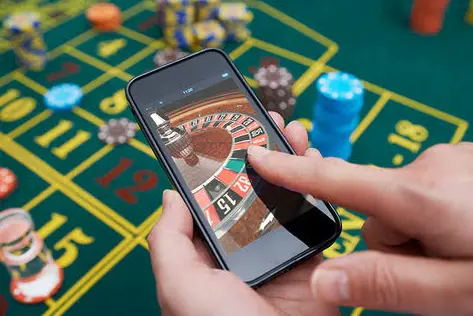
Why the Clock Beats Pure Sector Prediction
Sector prediction without clock discipline is astrology with extra steps. I have watched players memorize wheel layouts, chart diamond deflector impacts, and still bleed out because they placed chips after the drop zone window closed. The clock is the gatekeeper. When the countdown enters its final phase, the ball's trajectory is already committed within a narrow probabilistic band. Before that phase, you are guessing. After it, you are reacting to noise.
The real edge lives in the overlap: the moment the clock enters the critical window while the ball is still tracking toward a predictable deflector strike. That overlap is measured in fractions of a second, and no human reaction time can exploit it consistently without pre-positioned bets. This is why the drop zone timing mechanic is so misunderstood — it rewards preparation, not reaction.

Clock Drift and Studio Latency Traps
Now for the part that really burns: stream latency. Your clock is not the studio's clock. Depending on your feed, you are watching a delayed reality by anywhere from 200 milliseconds to over a second. The drop zone clock you see has already expired in the physical studio. Any timing strategy that ignores this drift is built on sand. 🕰️
Professional-grade analysis requires measuring your personal latency offset against multiple spin cycles and adjusting your perceived drop zone window accordingly. The wheel drop zone clock becomes a lie the moment you forget that it is a delayed echo, not a live pulse. Studios will never advertise this gap, because the gap is their house edge in disguise.
Can Time Actually Be Beaten?
Yes, but only in the sense that a chess grandmaster beats a clock — through pre-computation, not speed. You cannot out-react the drop zone clock, but you can pre-map the probability corridors associated with specific clock phases and ball release signatures, then position your stakes before the window opens. This is not gambling bravado; it is cold, mechanical preparation. The players who treat the clock as a countdown to action rather than a countdown to decision will always be a step behind the physics.
Track the drift. Map the dealer fingerprint. Respect the drop zone window as a hard deadline, not a suggestion. The wheel will not wait for your nerve to settle.